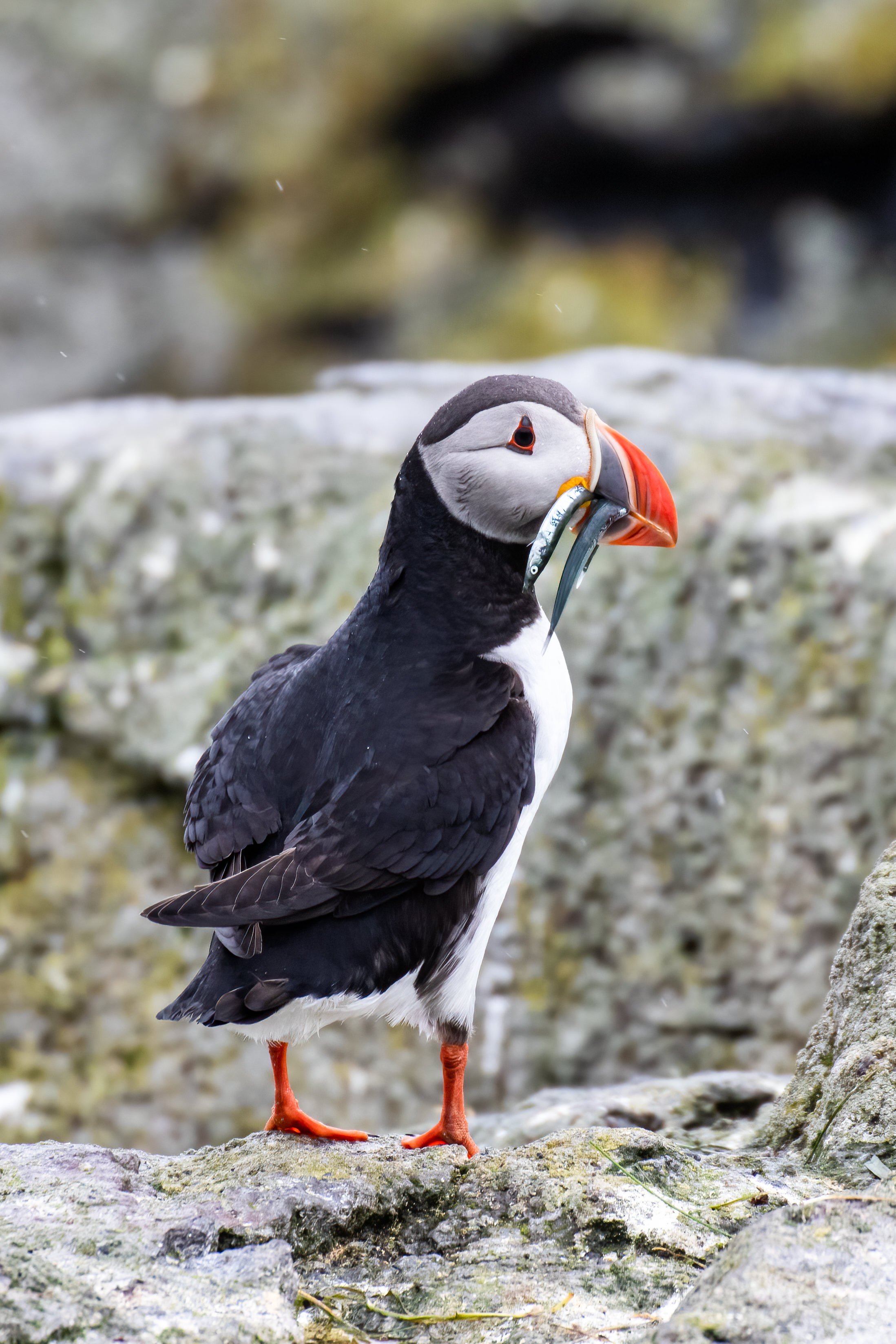
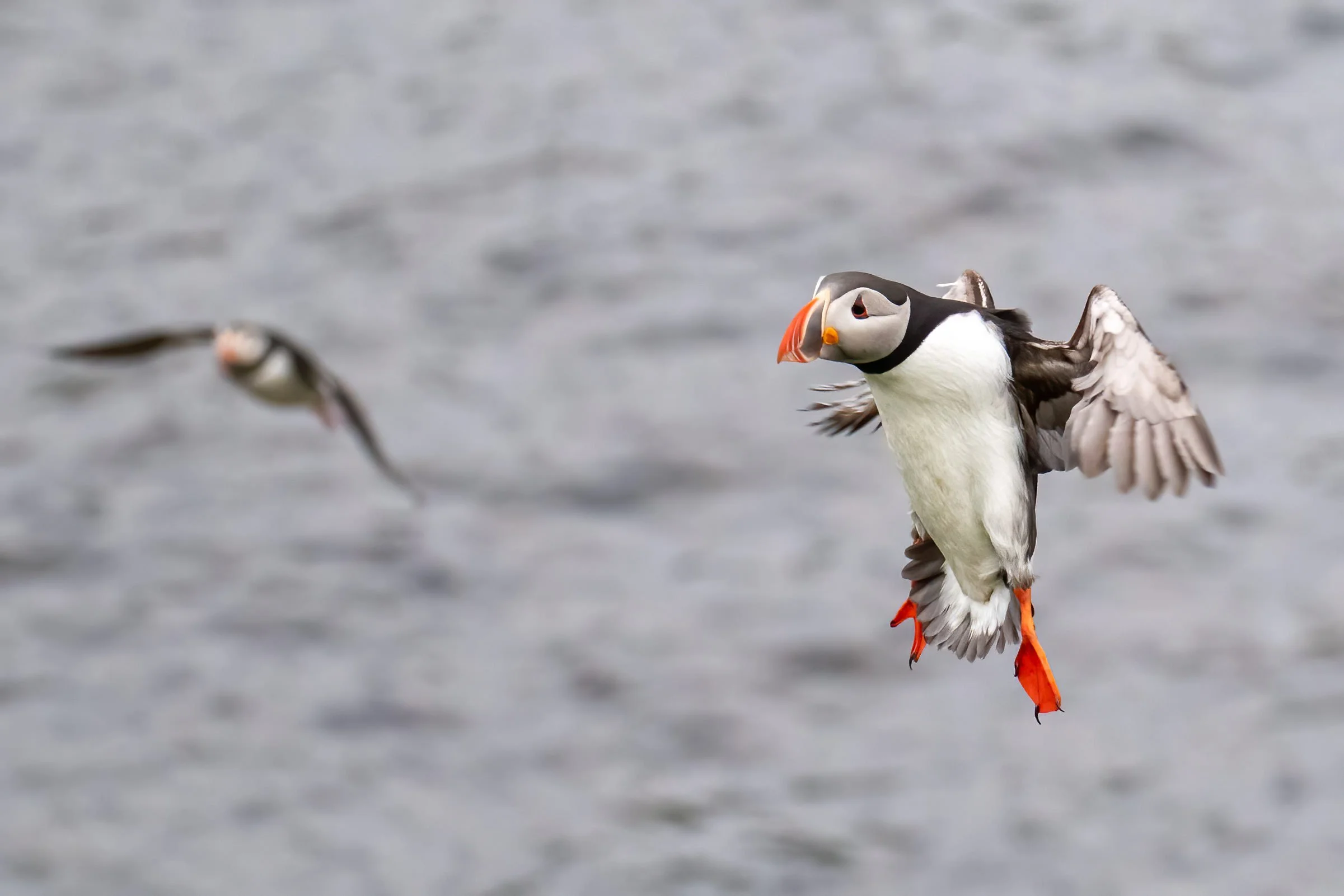
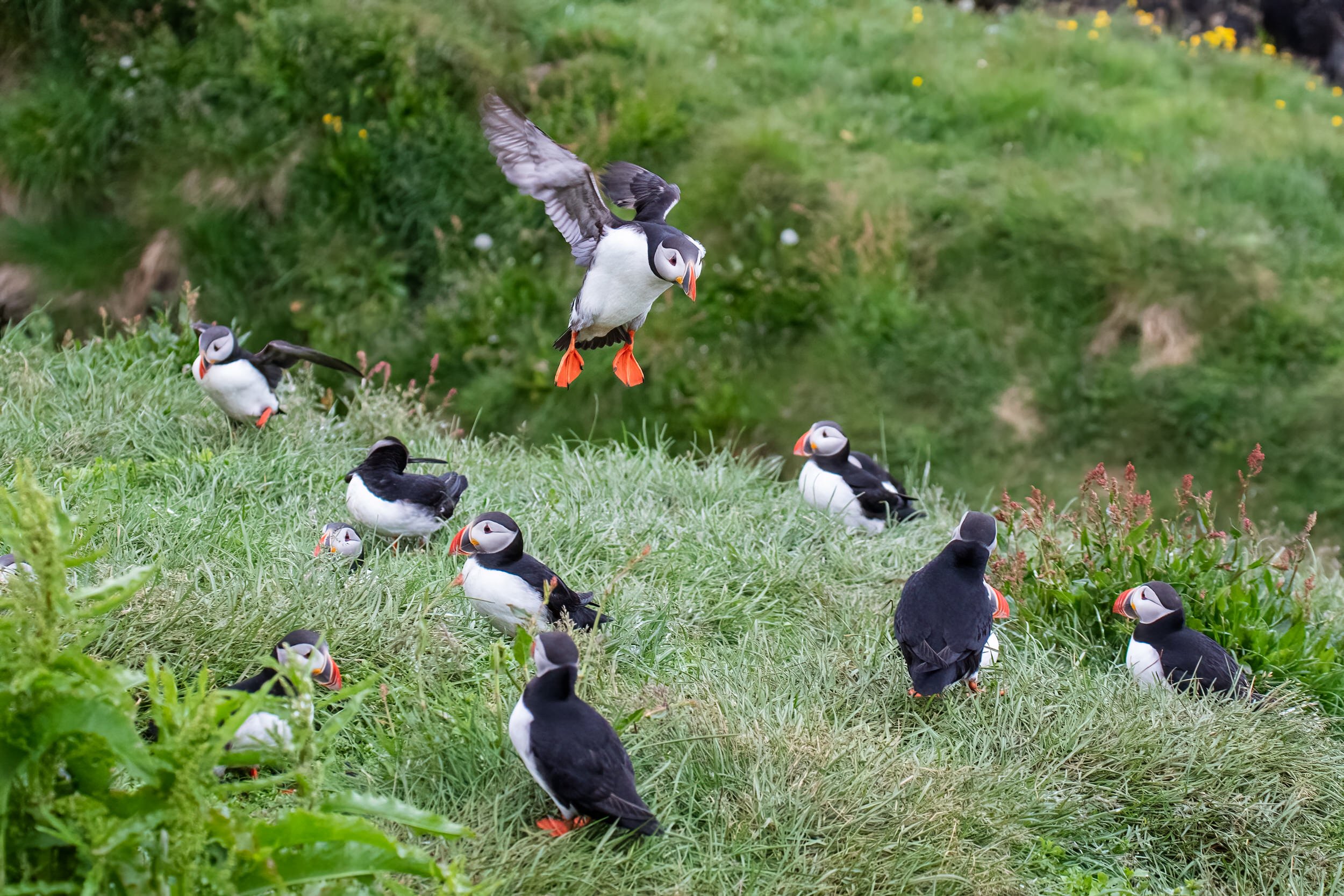
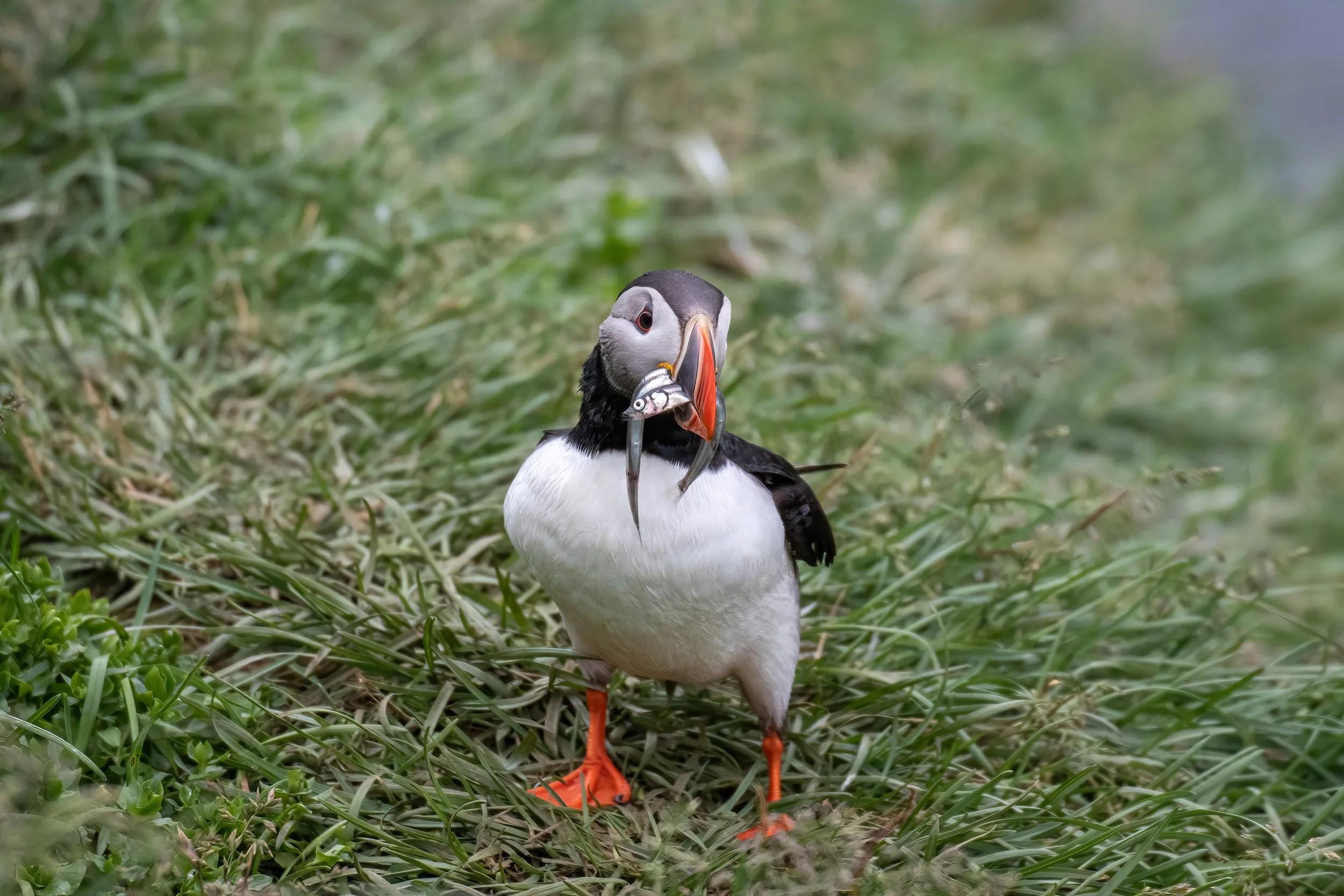
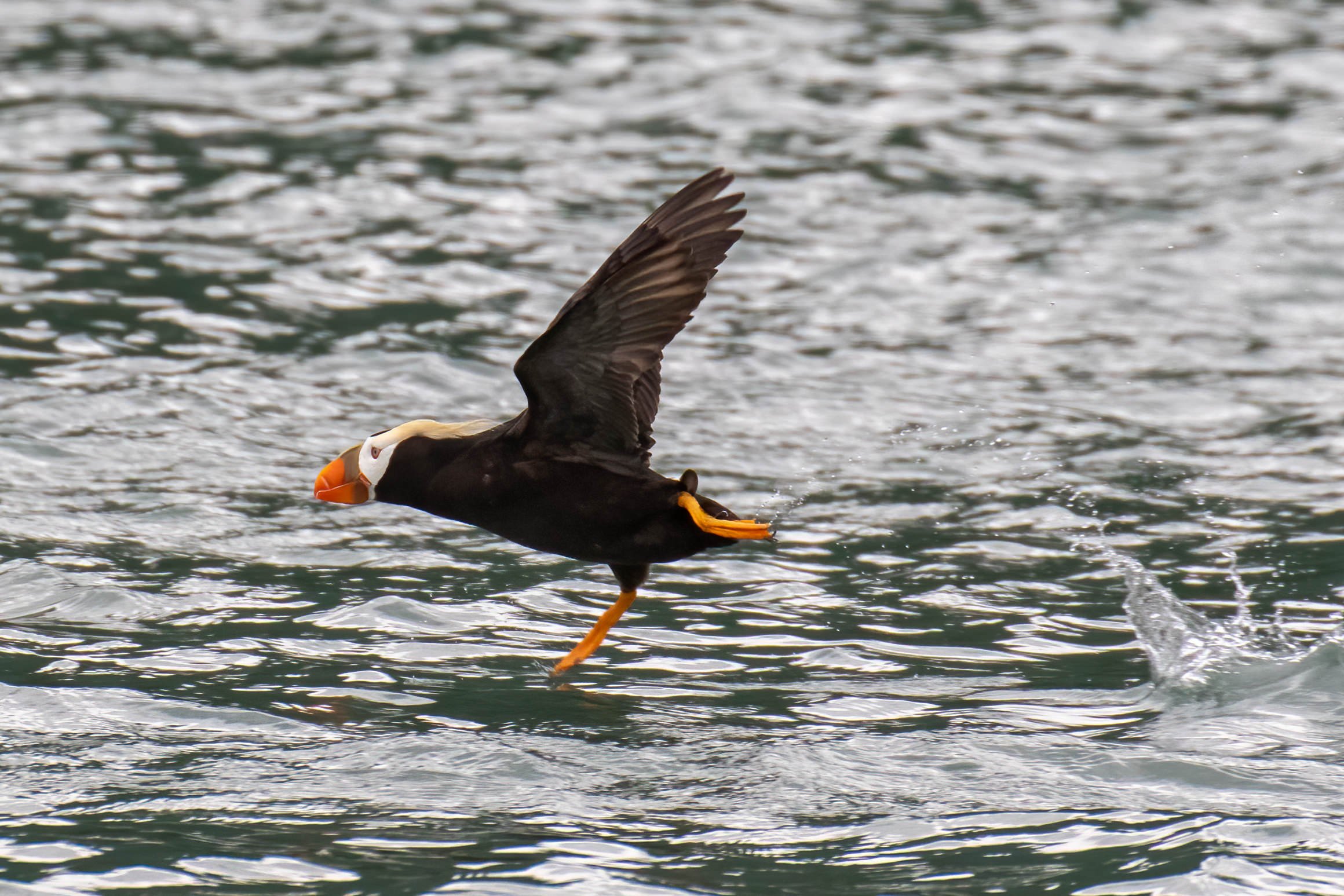
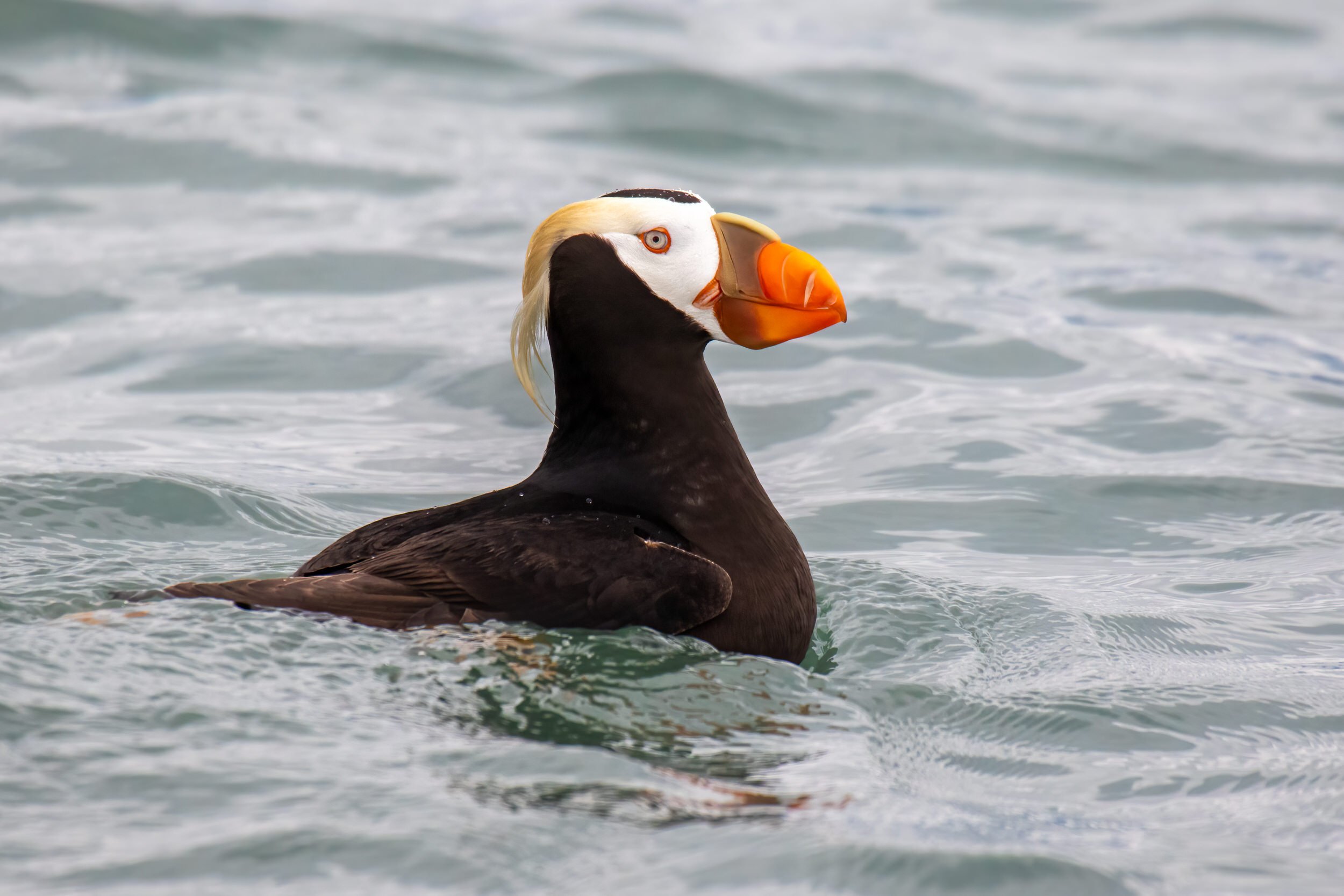
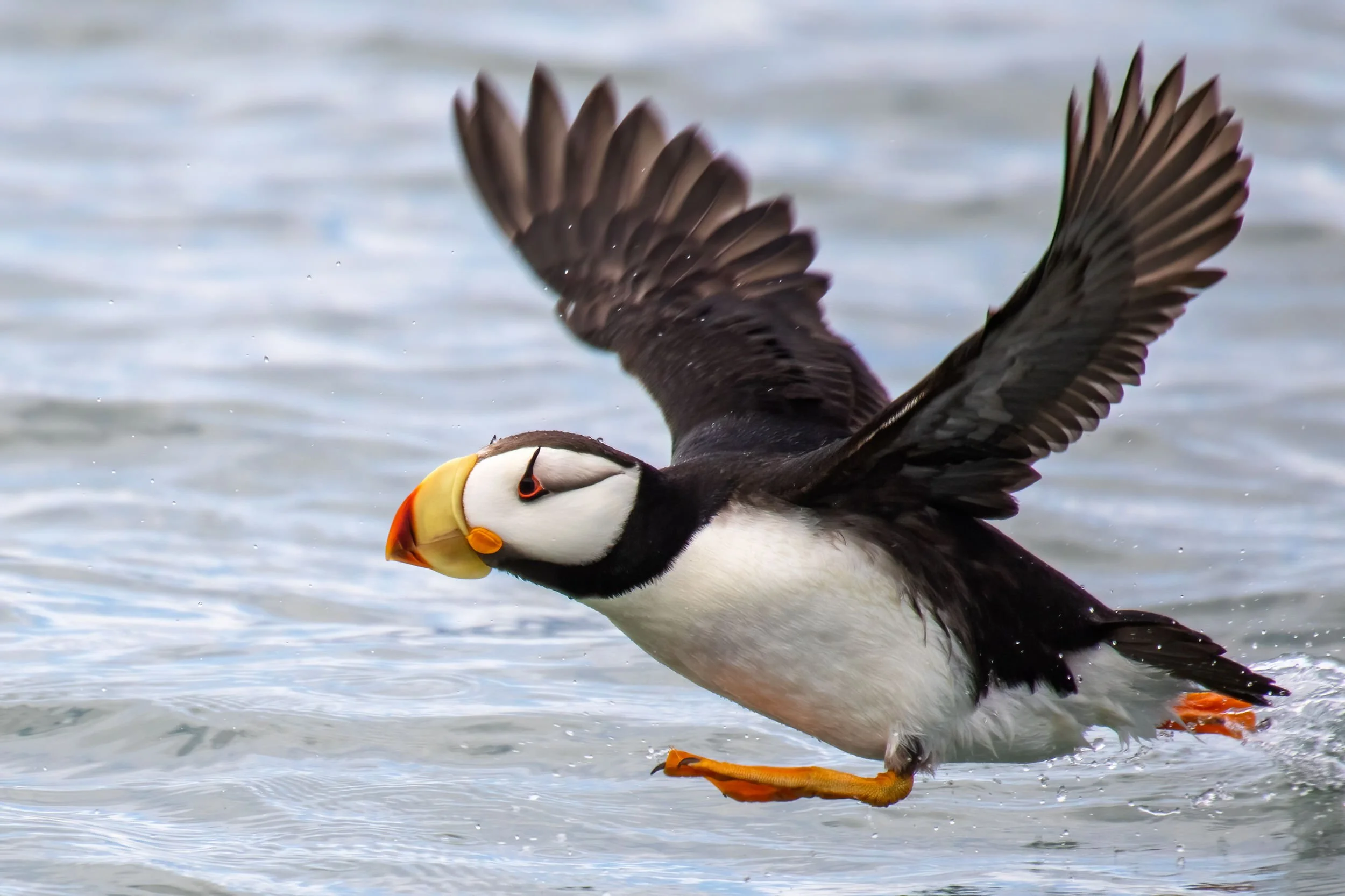
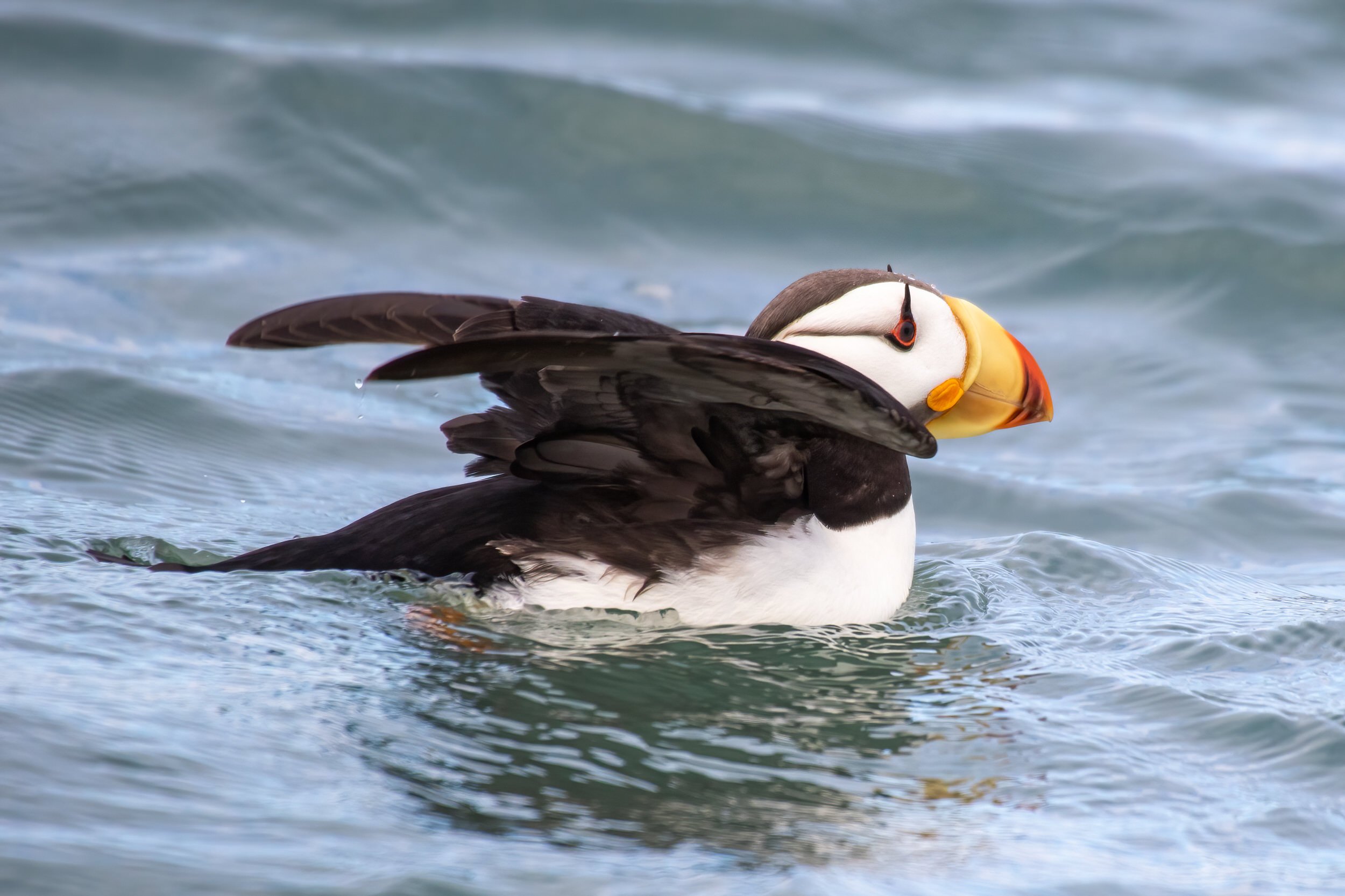
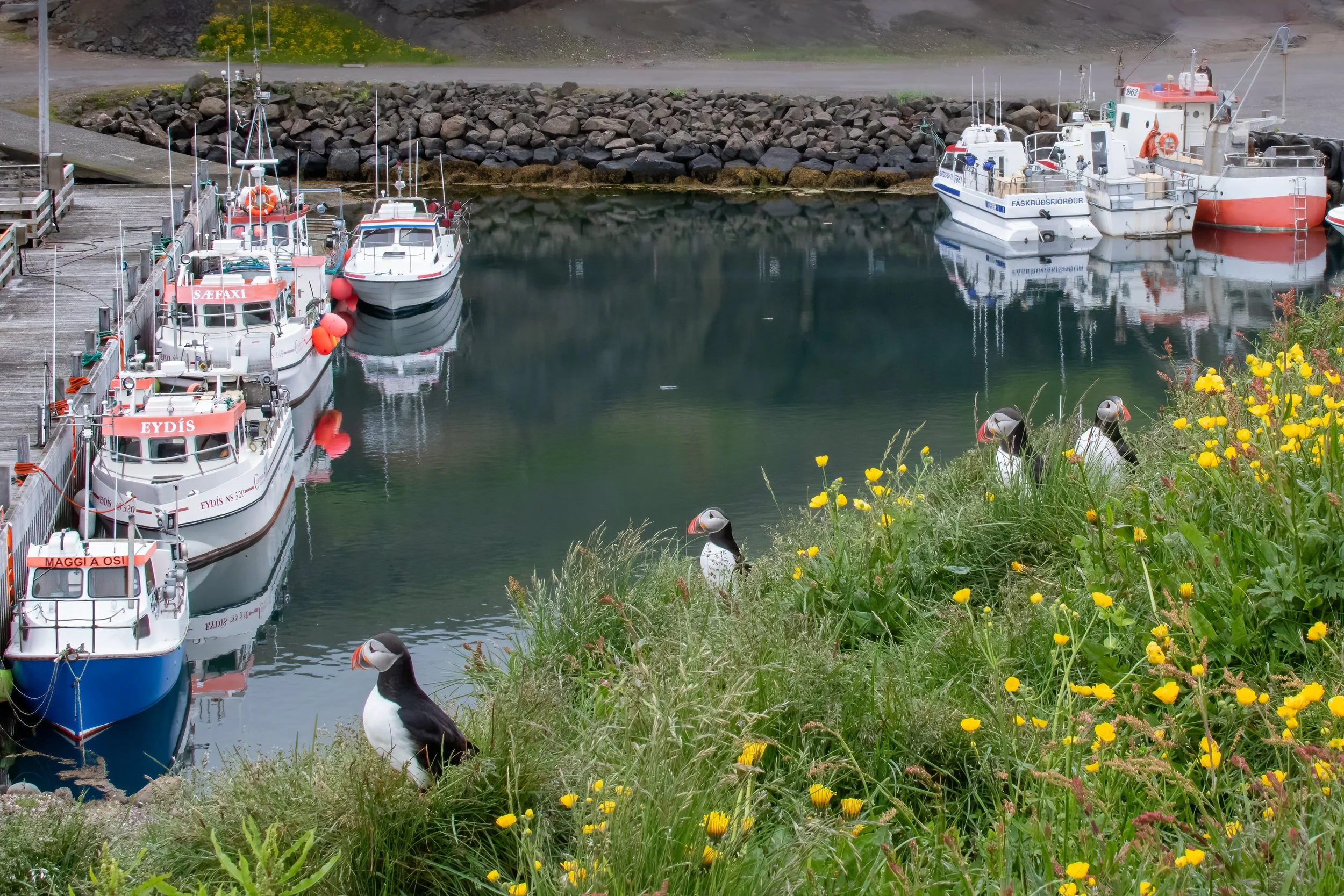
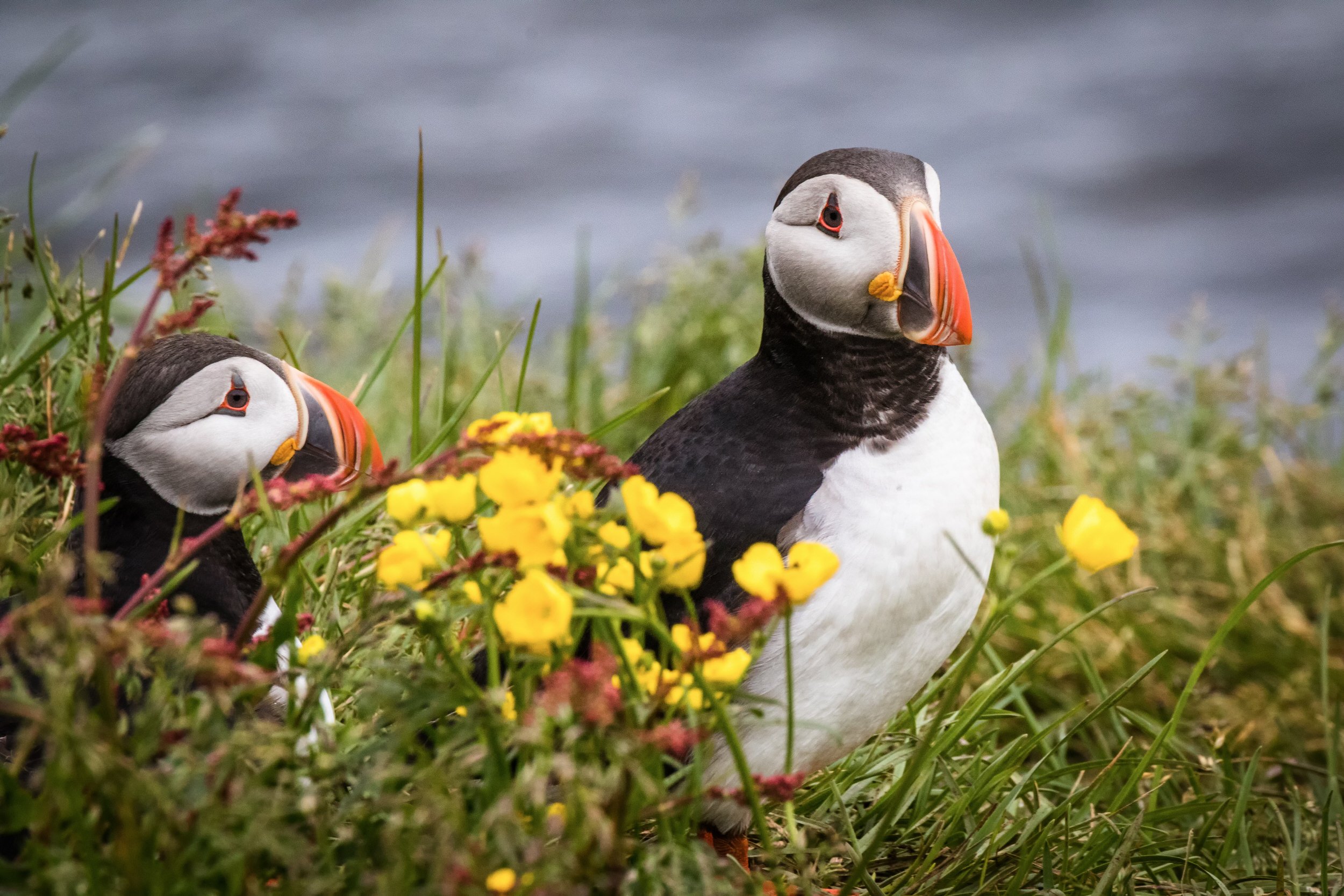
Flashes of trademark black, white and orange dart about against tall green cliffs sloping down to a rolling sea.
These are my favourite birds in action.
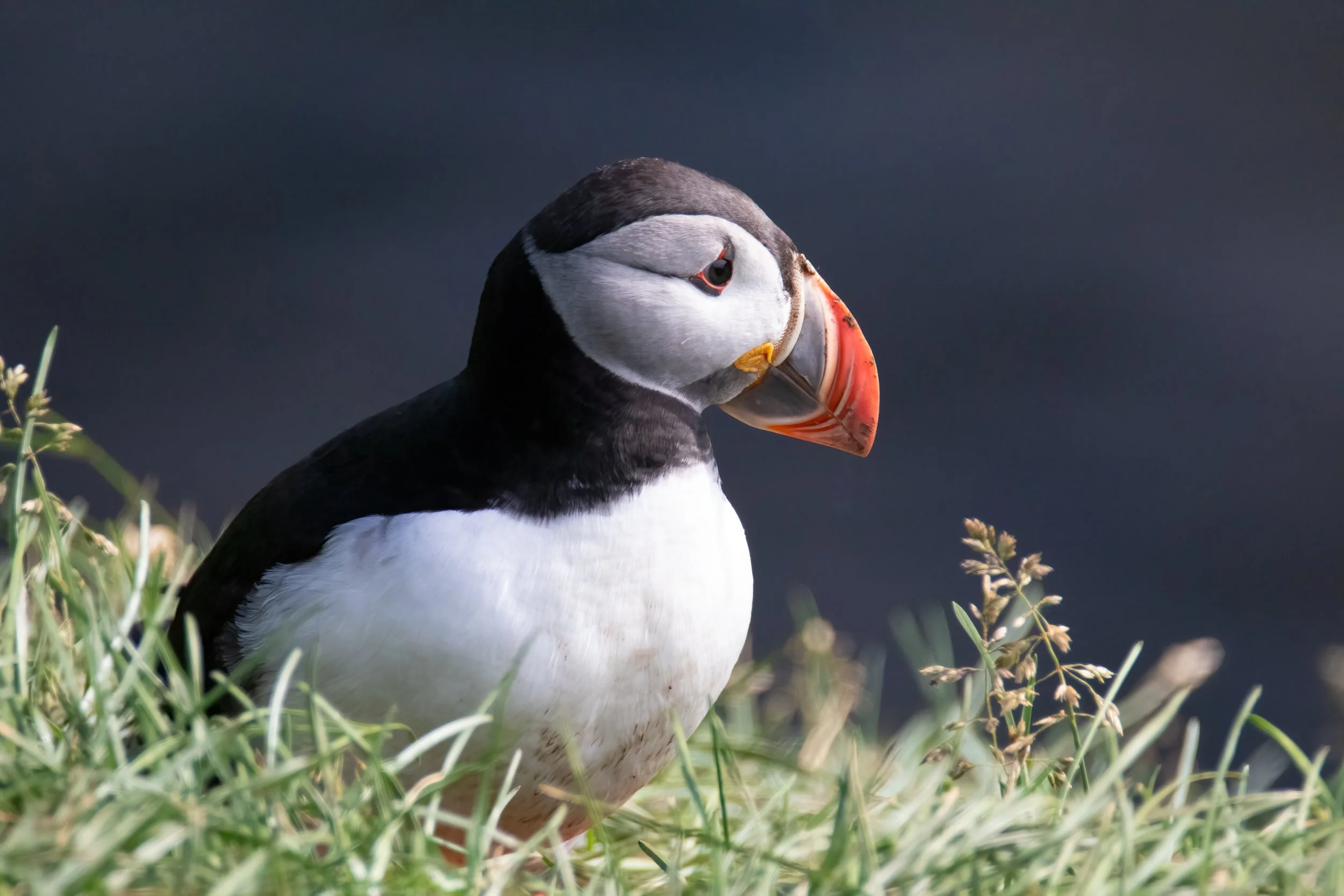
Only 25cm long, and with their dramatic black and white livery (like their Auk cousins), I have long been captivated by these striking little ‘clowns of the sea’. Puffins have bright orange, yellow and gray beak plates during Spring and are super photogenic albeit difficult to photograph.
There are 3 different species: the Atlantic Puffin is found across the Northern Atlantic and is the smallest but most common, while the Tufted and Horned Puffins are found in the North Pacific. 60% of the Atlantic puffins breed in Iceland, but their numbers are declining due to increased pressure on their food sources, predators and marine pollution (including plastics).
For most of the year these charismatic little birds live at sea, but they mate for life and return to the same site each year for just a few months to nest and raise one precious chick in burrows that usually sit at the top of steep and windy cliffs.
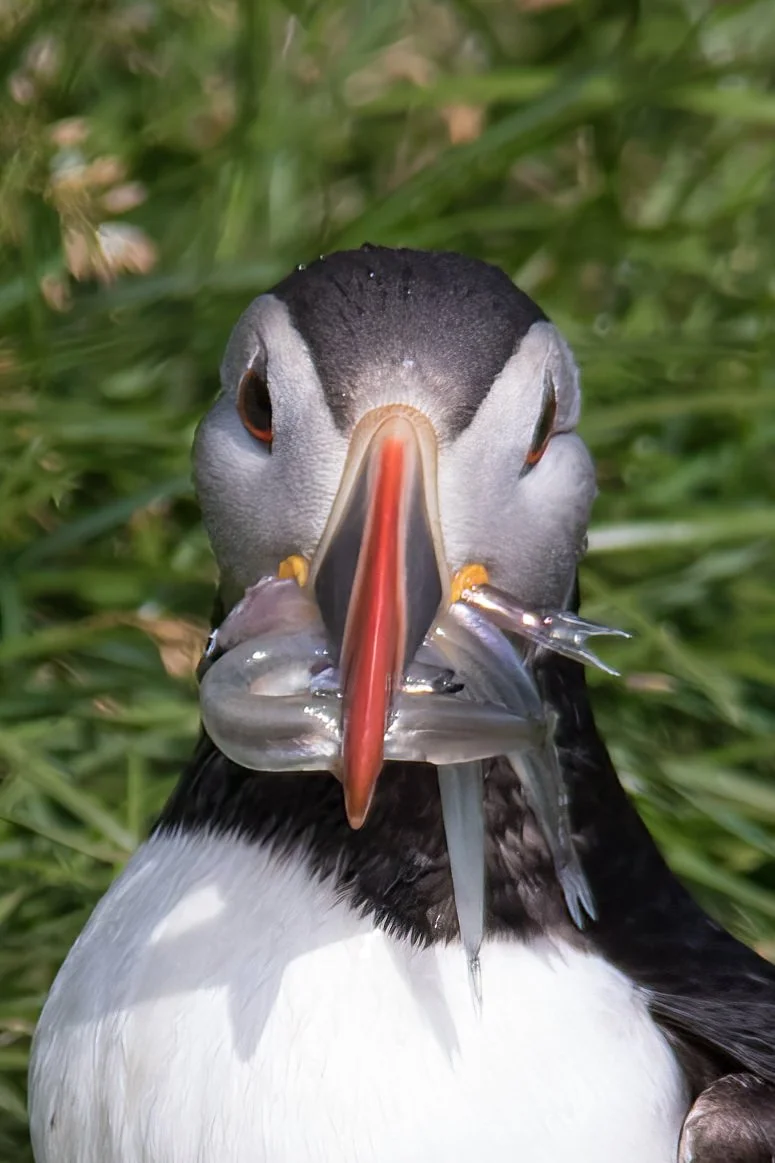
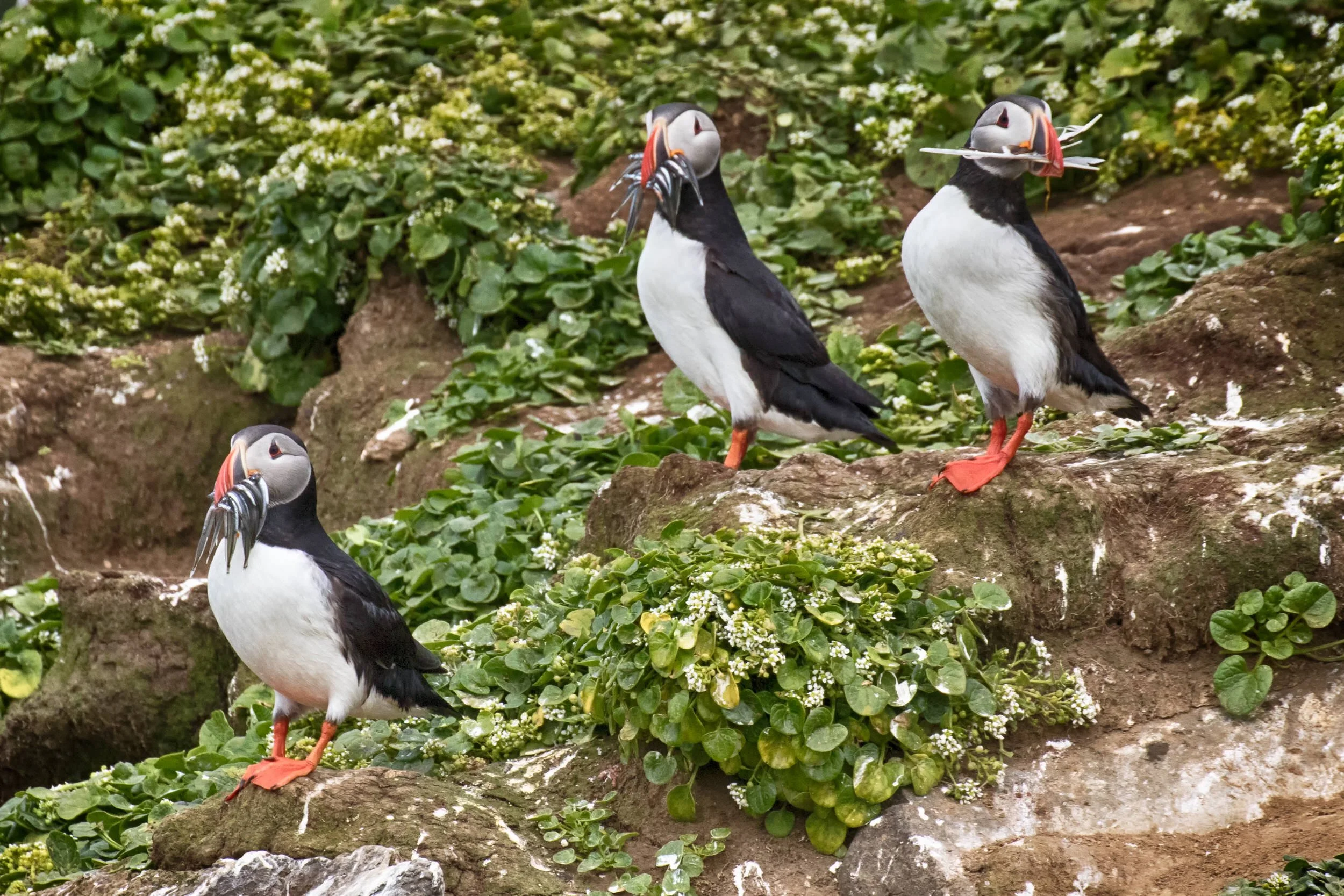
Once a puffling hatches, the parents take it in turns to return to the nest multiple times a day with small fish like herring held in their beaks (small enough for the puffling to swallow whole), until their offspring fledges at @5-7 weeks.
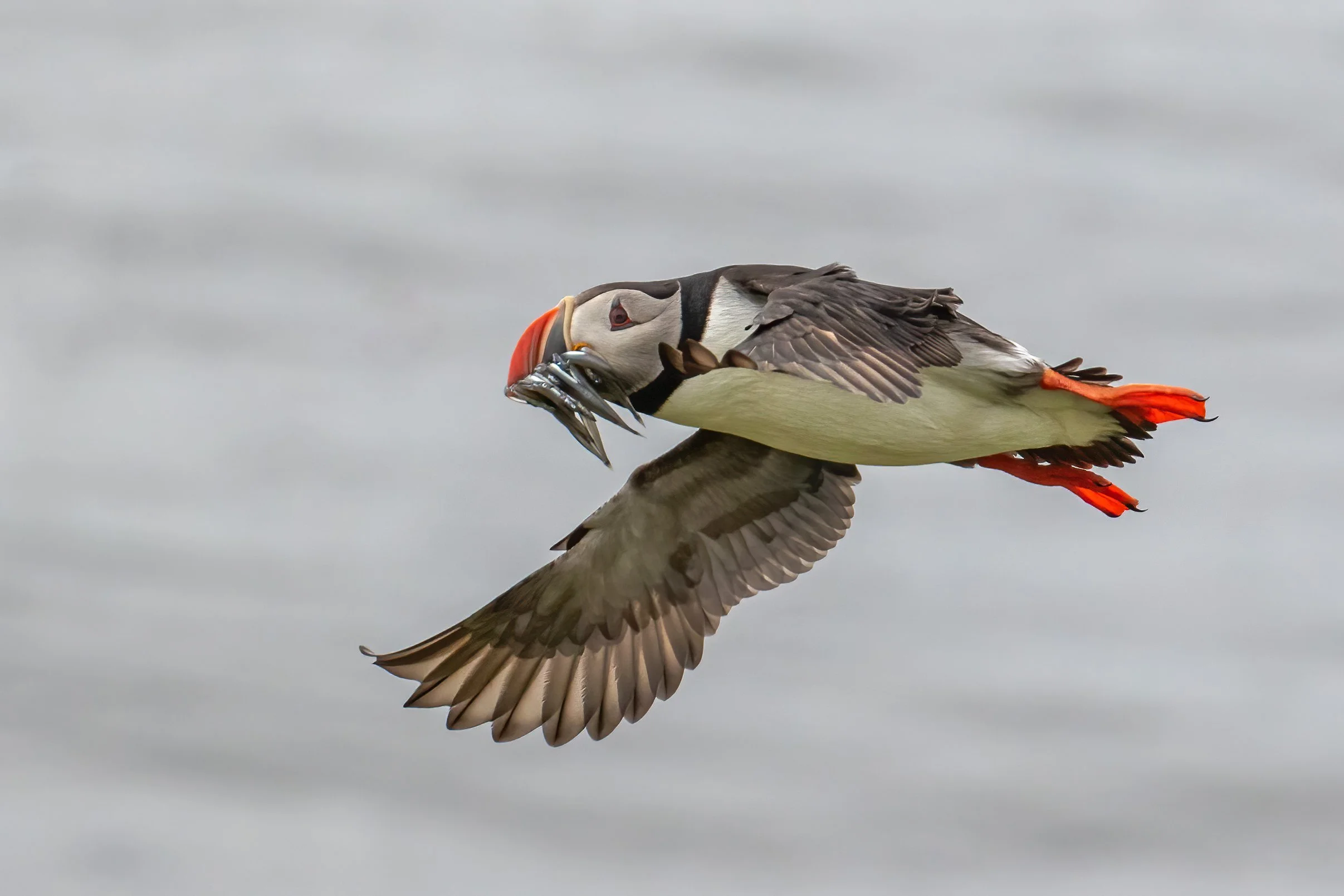
This nesting period is the magic opportunity for photographers, but these small fast birds dart about at speeds of up to 88km per hour, and their wings flap up to 400 times a minute in the air, so they are extremely difficult to photograph in flight, especially if the photographer is bouncing or rolling around in a boat or zodiac at sea level.
The burrows are also very fragile, so nesting sites are generally protected and good lateral viewing points on land can be hard to find and access.
I have been chasing puffins across the Northern hemisphere since my 1st encounter with them on the East coast of Iceland in 2016, and I never tire of watching them. It is a treat to see these dedicated parents on land, and an even better treat to capture good images of them in action.
Tips for photographers:
Research sites, access, and likely best timing for the chicks to be hatched but not yet fledged
Visit sites early or late in the day (the puffins are active and there will be fewer people)
Plan for a very high shutter speed (1/3500+ depending on your lens, light and focal length), if trying for an in-flight shot
You will also need good hand held tracking skills
Hope for some luck and don’t blink!
Sumburgh Head in the Shetlands, the Faroe Islands, and in Iceland Borgarfjordur Eystri, Grimsey island & Vigur Island are all highly rated sites for Atlantic Puffins
Silver Salmon Creek Lodge in Alaska is a great destination for seeing both Horned and Tufted Puffins from the sea (land access isn’t possible), as well as for photographing Brown Bears, but you will need to book well ahead to access and stay there